SELECTED WORK / 02
TideBound
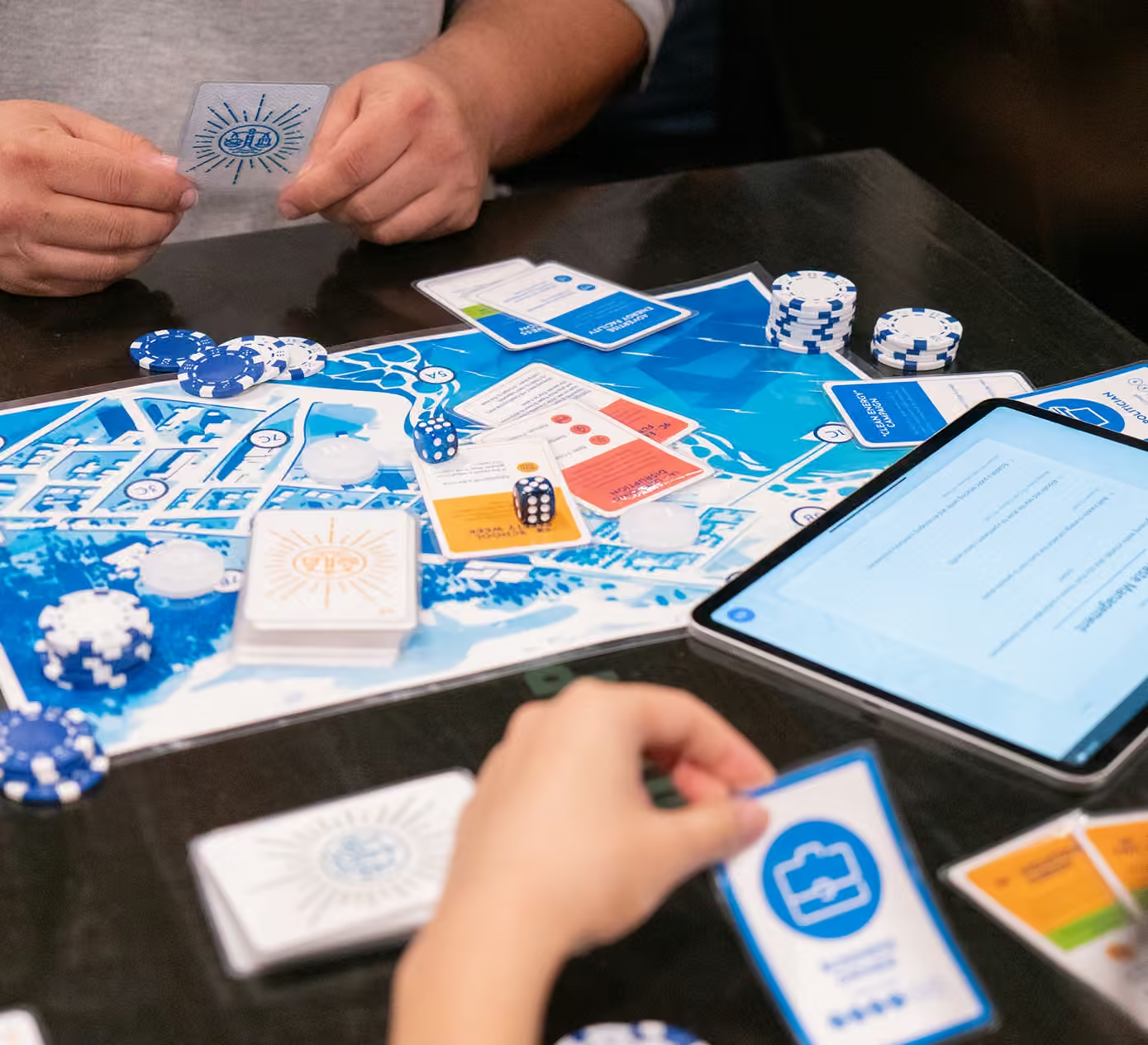
TideBound is an educational strategy board game for 4 to 6 players, built around the tension between coastal development and marine protection. Players take on asymmetric roles within a shared city, each with different abilities, priorities, and incentives. Every decision shifts the city's ecological balance and sets off consequences that unfold across a 10-year timeline.
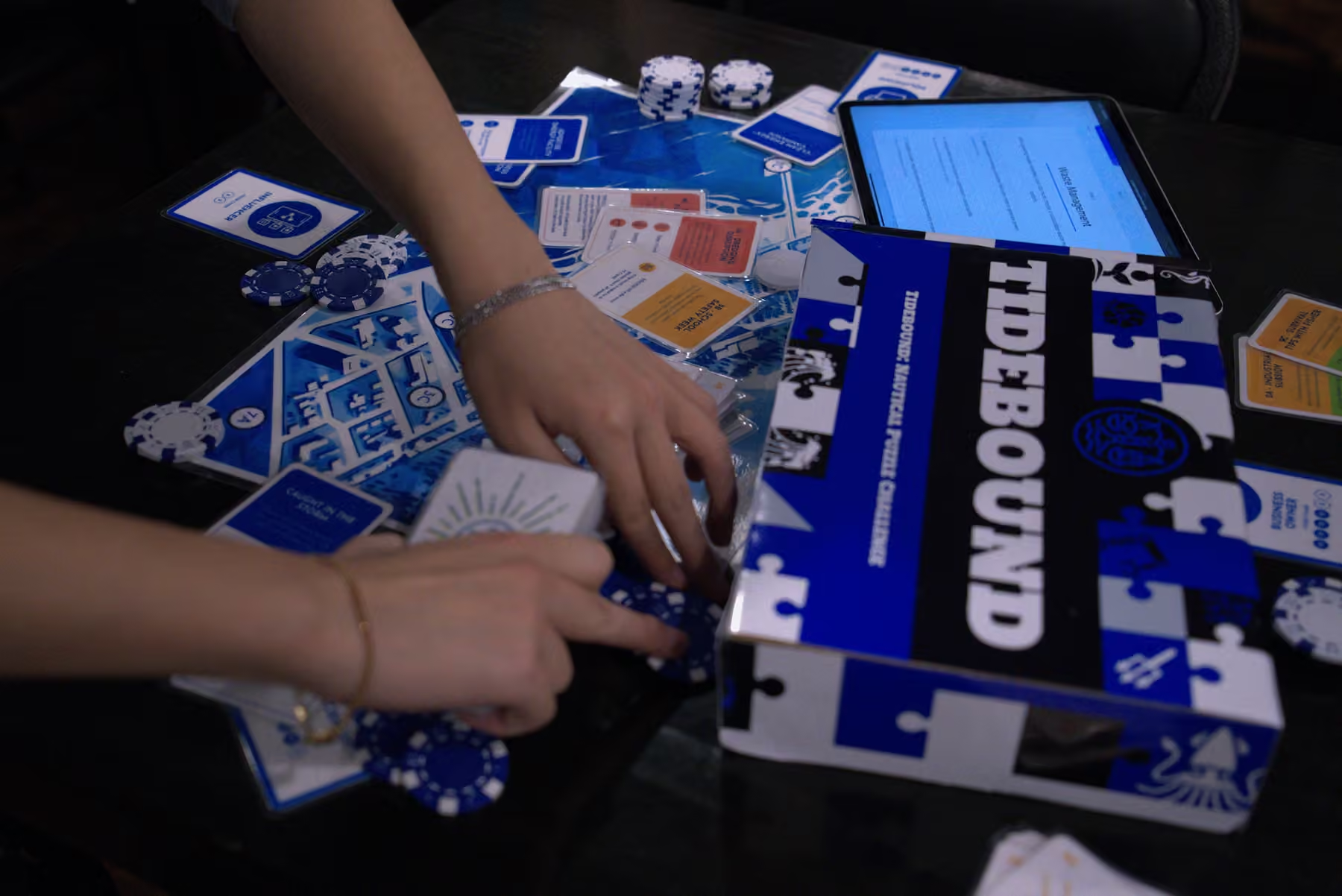
The game pairs a physical card-and-board system with a custom-built digital companion website that narrates events, tracks progress, and guides players through each round in real time. The goal was to make complex environmental systems feel tangible and urgent through play, without requiring players to memorize rules before they could start learning.
See TideBound in motion
Start with a short introduction to the project, then explore the game and its digital companion below.
WATCH ON YOUTUBE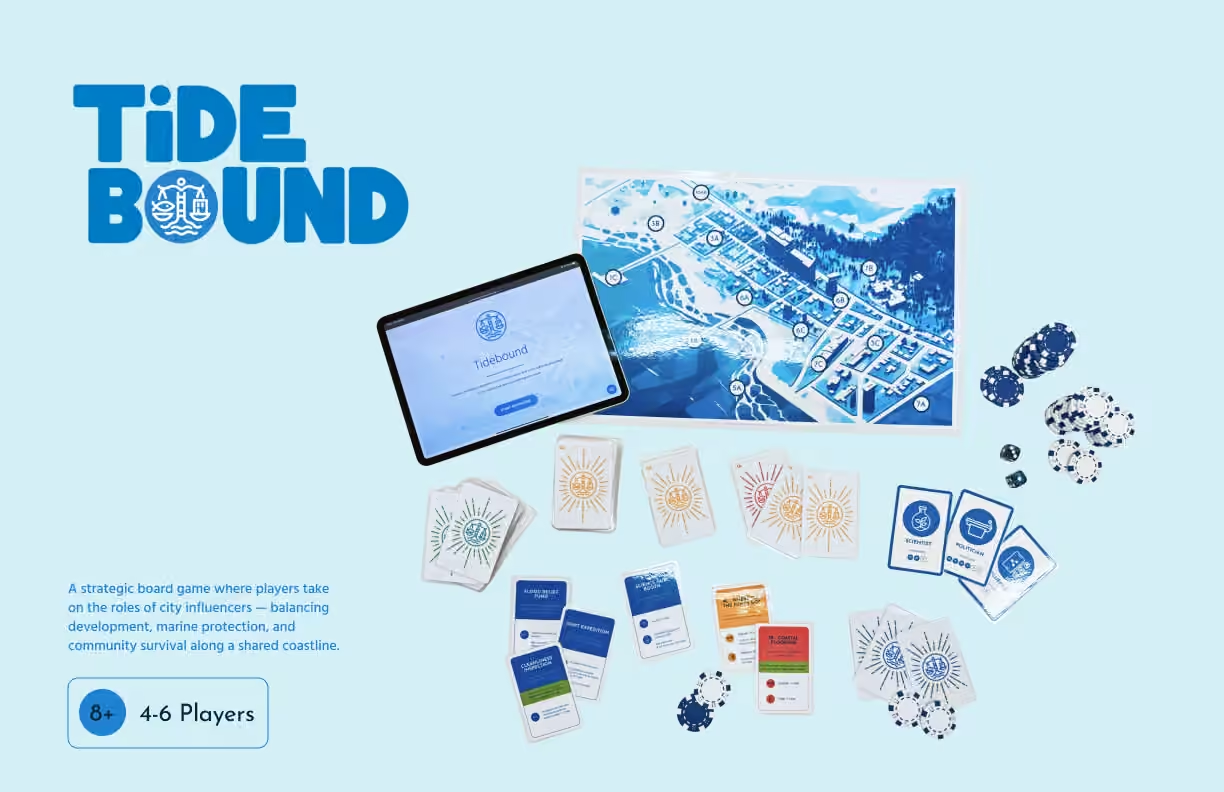
Make a system playable
Many people recognize ocean pollution as a problem, yet have few ways to see how everyday development decisions affect marine life and long-term sustainability. Educational materials often present these relationships as distant facts, while existing games tend to separate easy-to-learn play from meaningful environmental systems.
We wanted players to experience those connections through a shared coastal city: negotiate competing interests, watch choices change the ecological balance, and discover consequences in later years.
How might play help people understand and care about the effects of their choices on the ocean?
 01 / CURIOSITY
Discover ocean issues through events and consequences.
 02 / COLLABORATION
Negotiate distinct interests and a shared future.
 03 / SYSTEM THINKING
See how decisions create lasting effects.
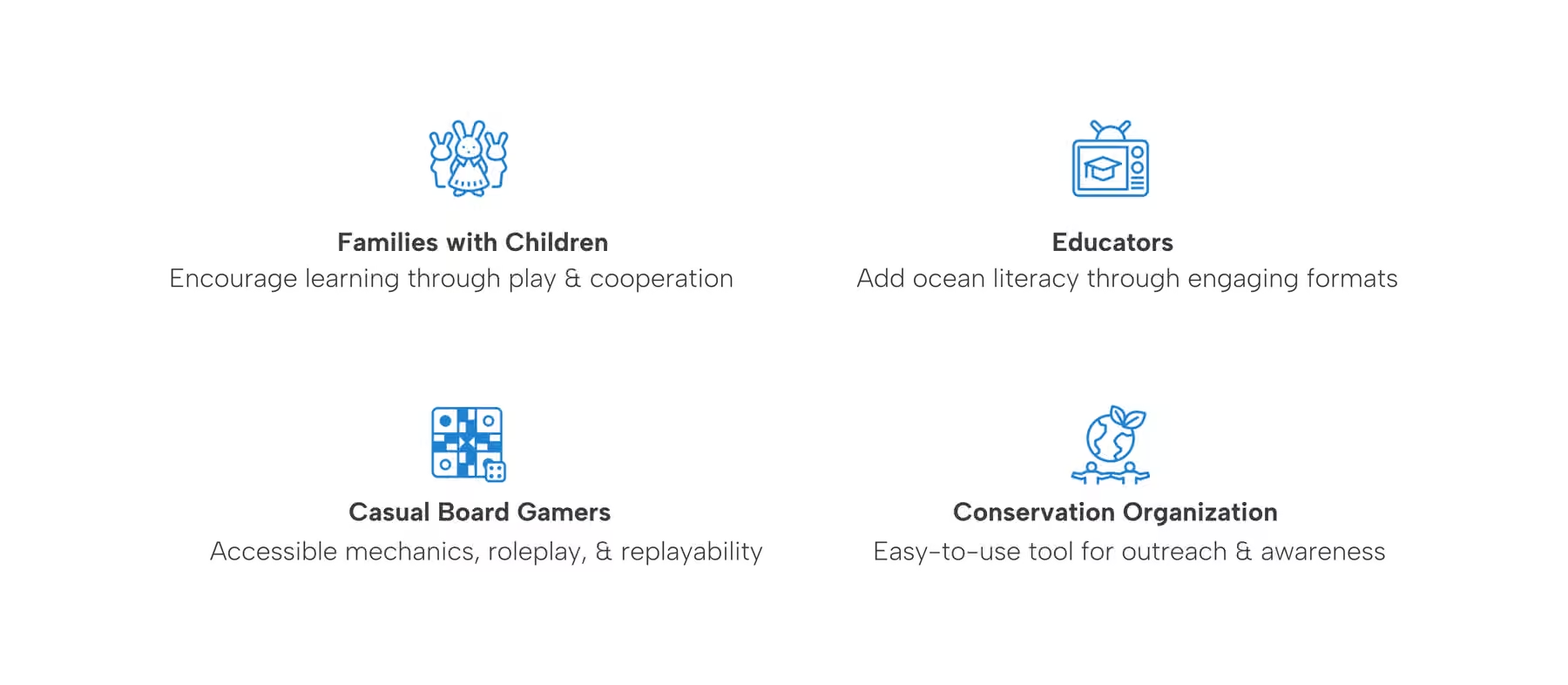
Who it's for
Market research
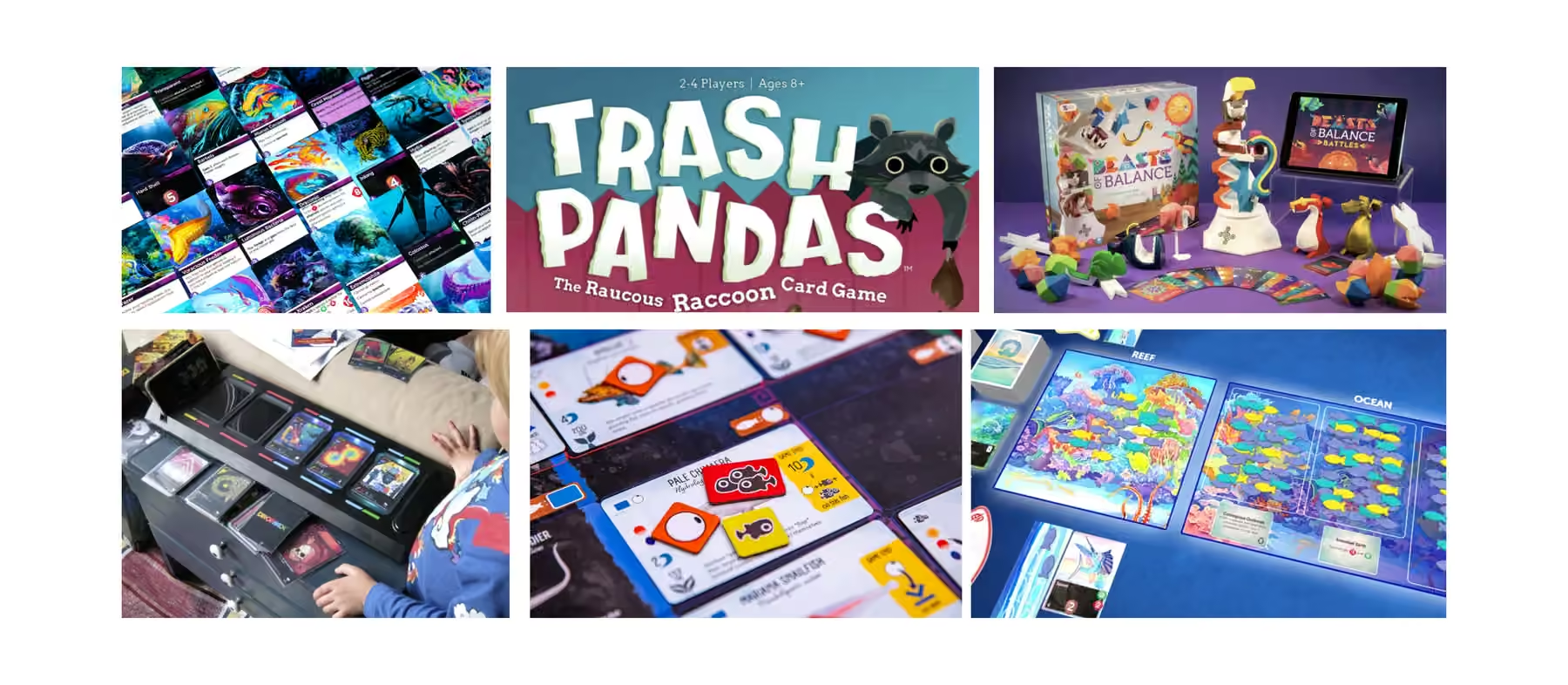
Existing games offered either simple facts or strategic depth; TideBound connects both through active play.
A city everyone shapes
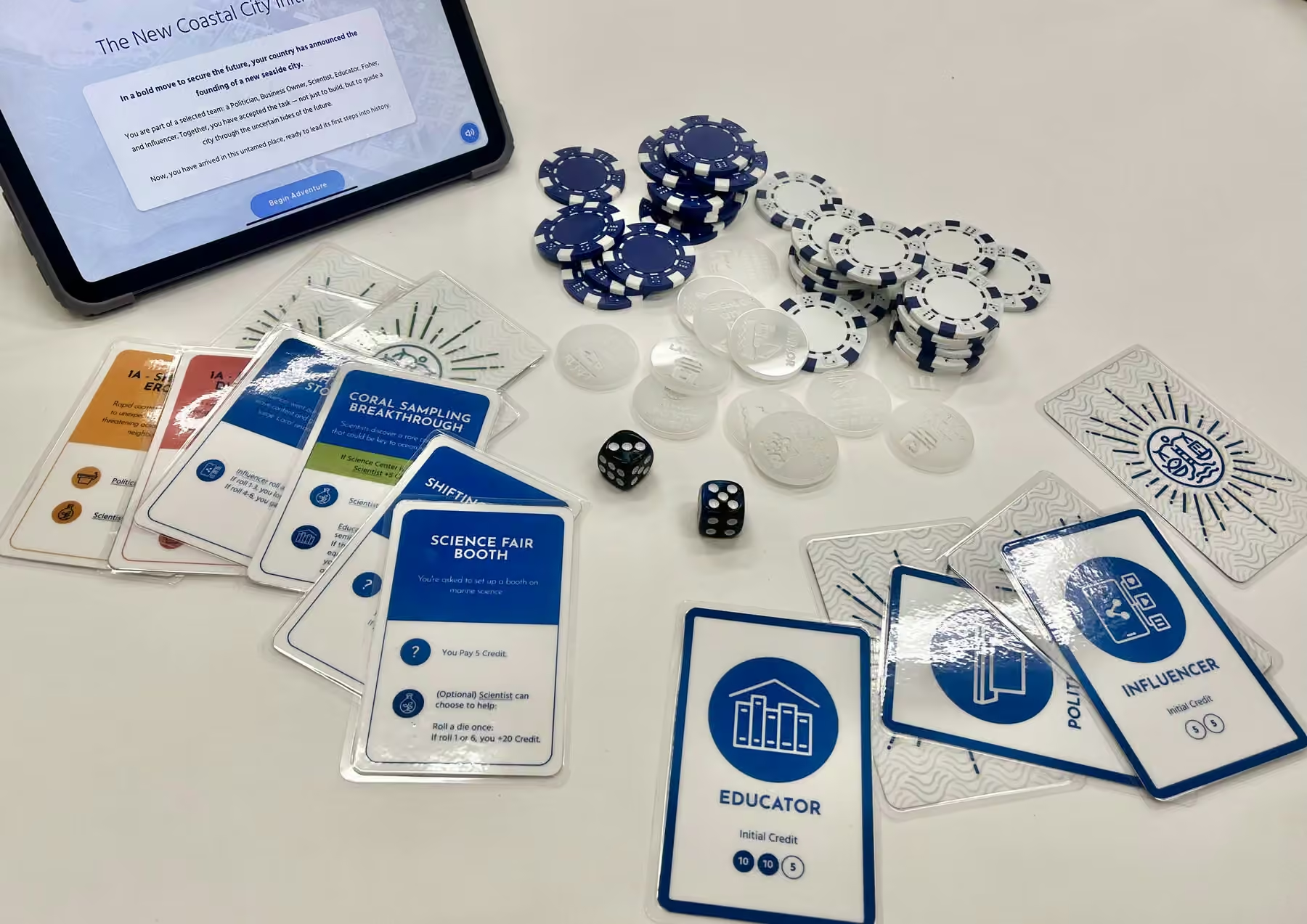
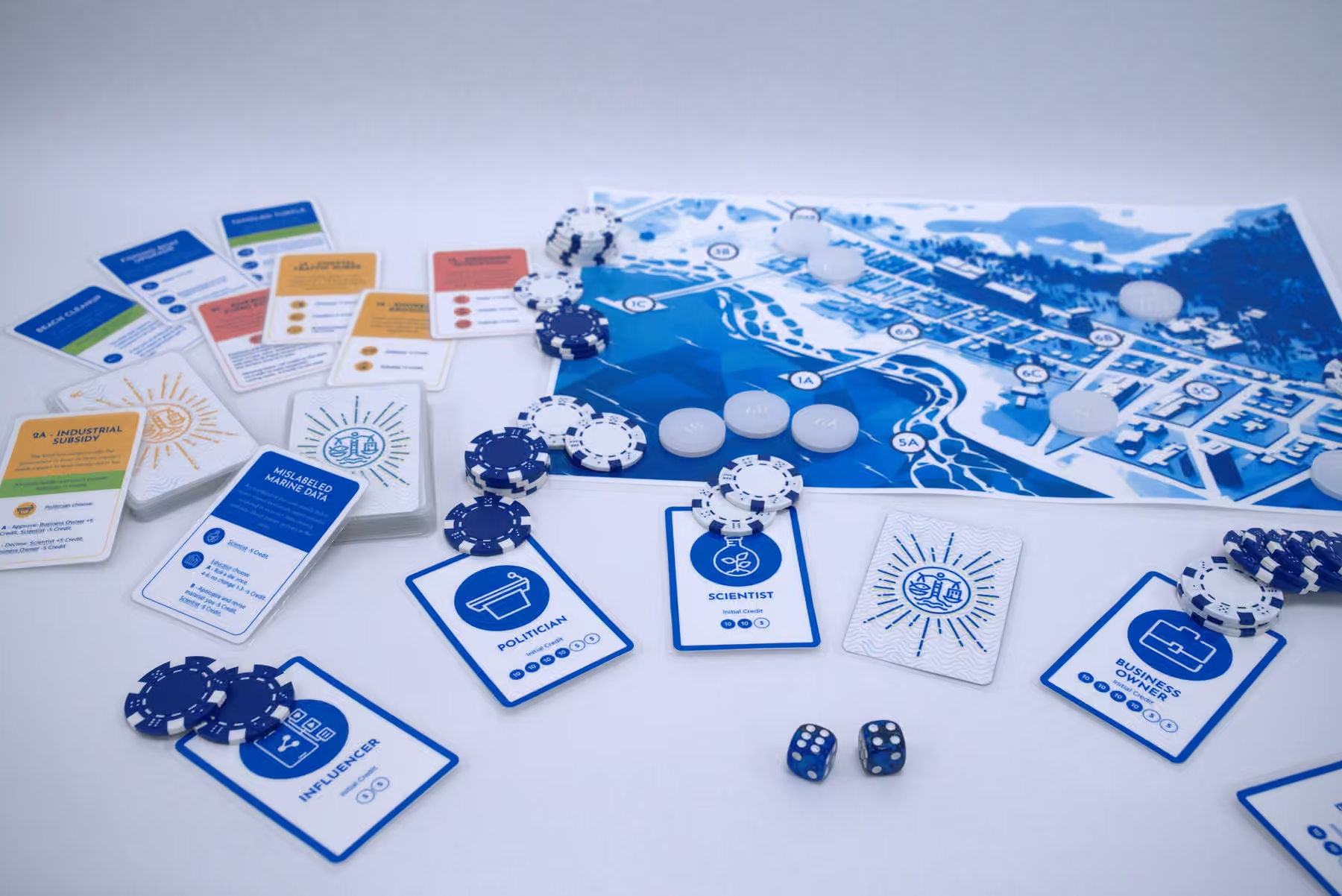
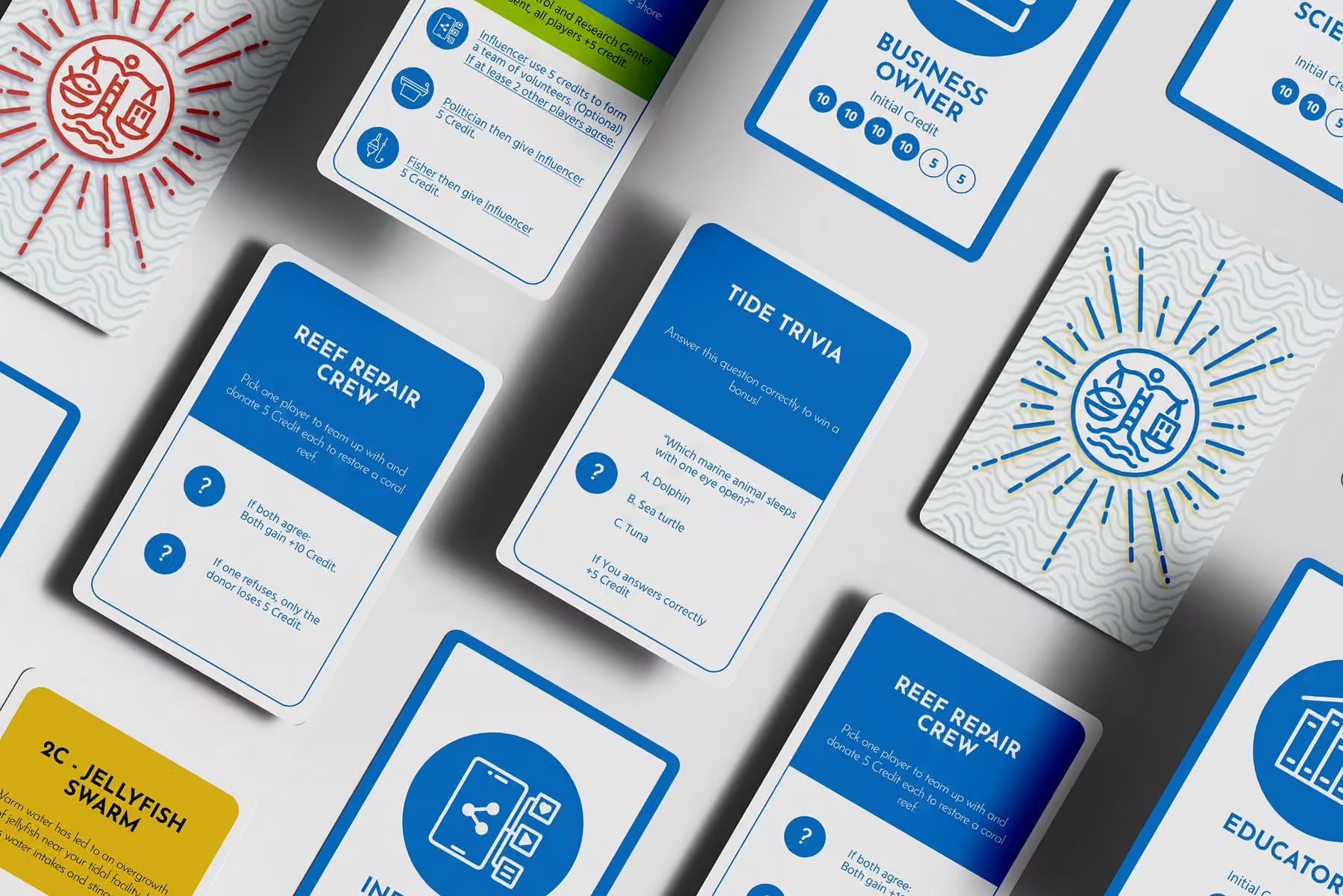
Players take on six roles—Politician, Business Owner, Scientist, Educator, Fisher, and Influencer—each with different starting Credit, abilities, and priorities. The role cards give everyone a distinct stake in the city's future; major decisions still belong to the whole table, so personal gains must be weighed against the shared coastline.
Cards carry the consequences
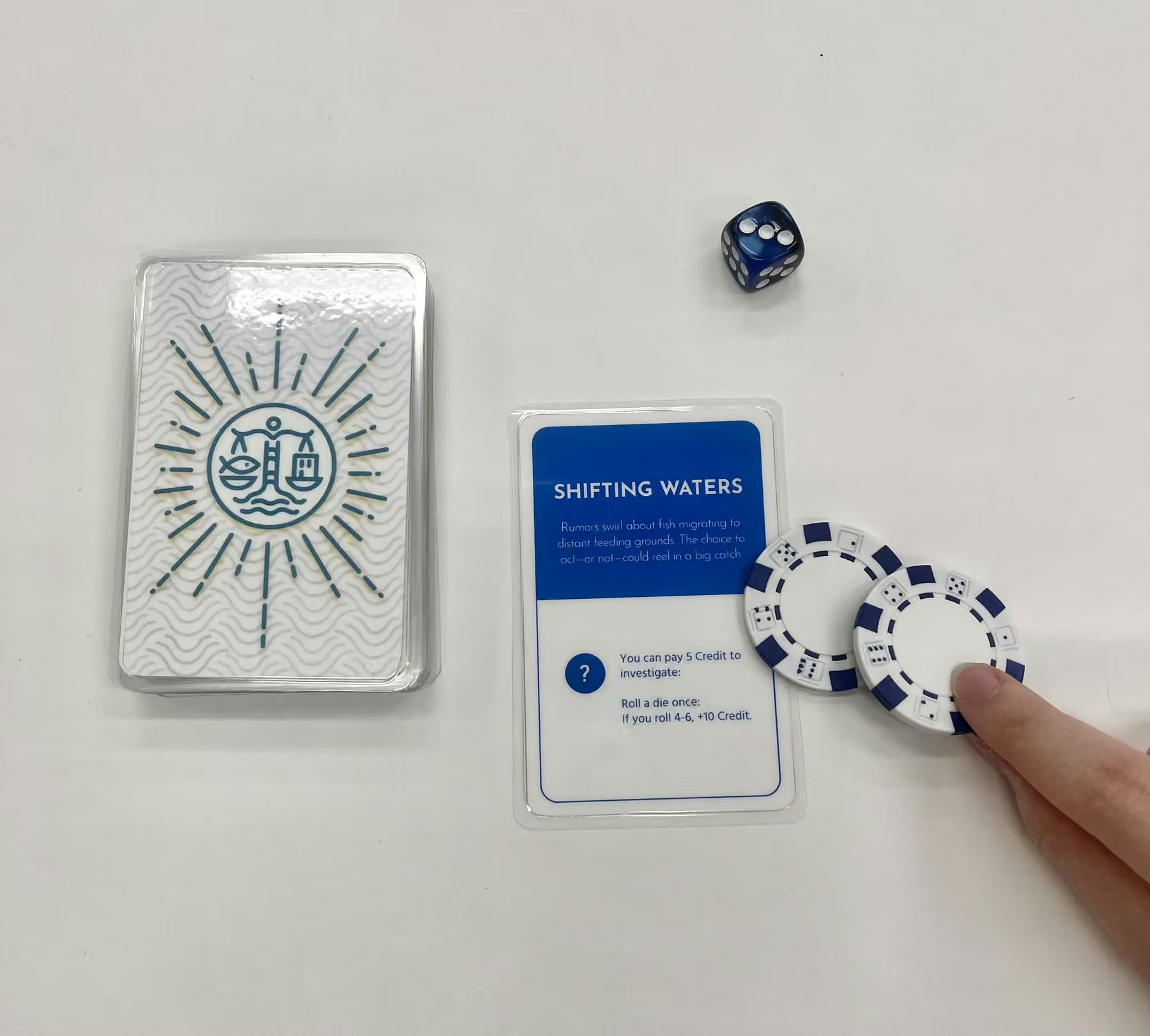
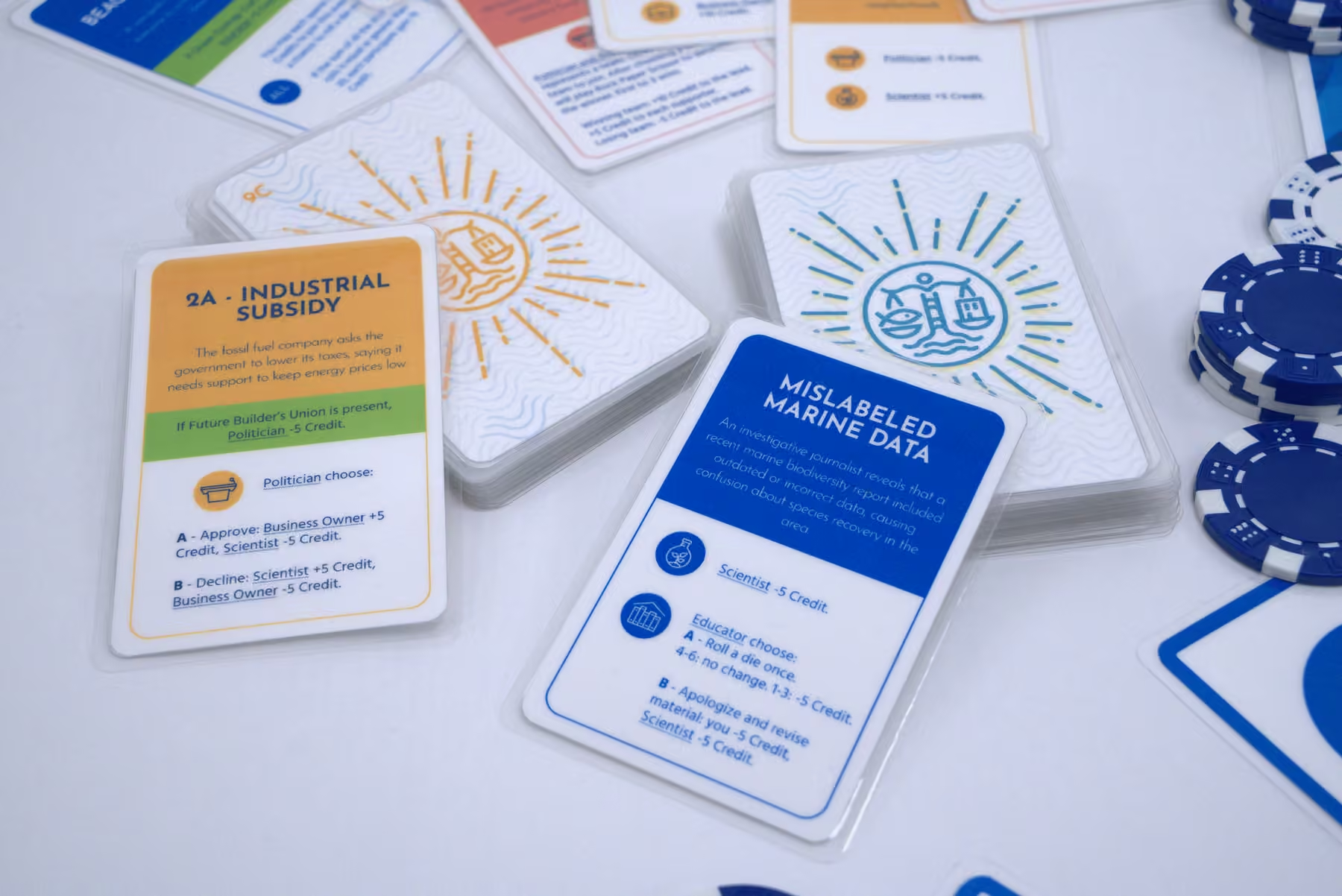
Each year's vote changes more than the city's current state. Event Cards interrupt plans at the table, while Consequence Cards bring earlier decisions back into play in later years.
Events interrupt the plan.
Some cards affect a particular occupation. Others ask players to respond as a group. Facility choices can change what a future card means, connecting a previous vote to a later consequence.
The deck remembers.
A harbor decision may add shoreline erosion, traffic, or dredging cards. Players see that a choice is more than an immediate Credit change: it changes the possibilities of the next round.
From one decision to the next year
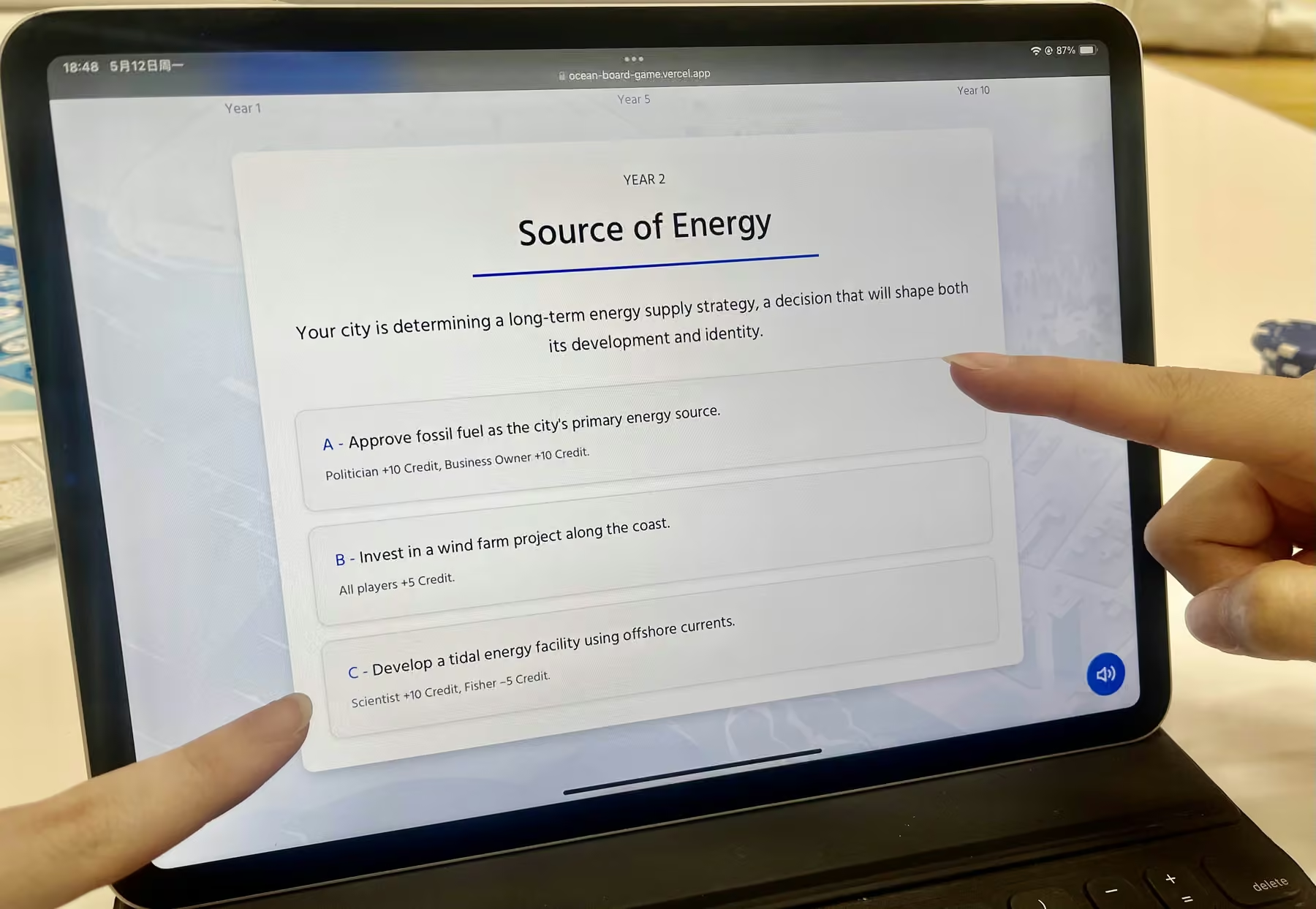
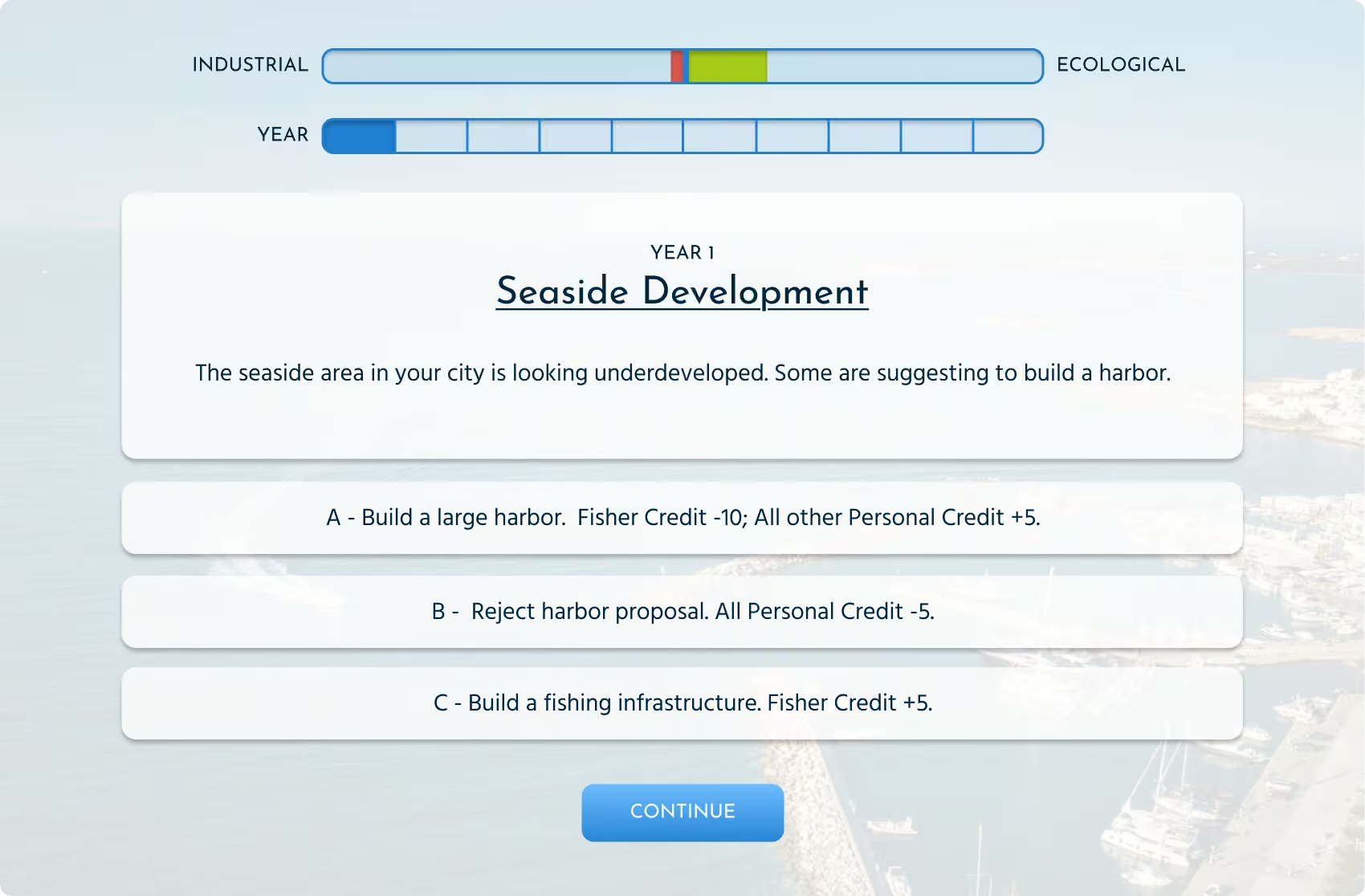
After choosing roles and receiving starting Credit, players move through ten in-game years. Each year begins with a Major Event and three possible responses; the decision and the cards that follow can change what happens years later.
- 01Face a Major Event
Read the citywide proposal and its three choices.
- 02Decide together
Negotiate competing priorities and choose one path.
- 03Update the city
Apply Credit and Balance Bar effects; add any future consequences.
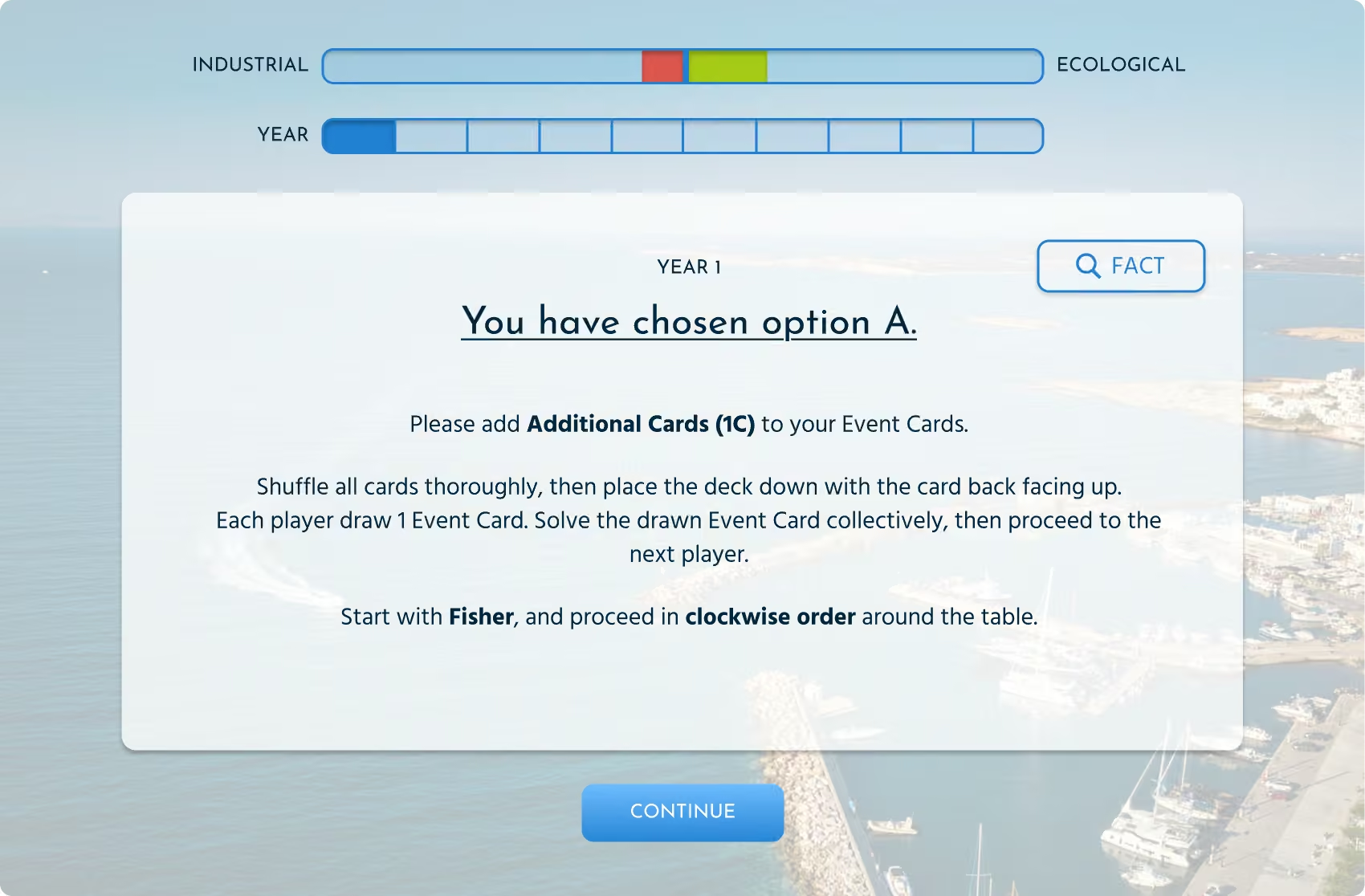
- 04Draw Event Cards
Each player draws one card and resolves its effects.
- 05Advance the year
Record the result, then repeat unless the city collapses.
Growth has a boundary.
The Balance Bar tracks two accumulating stances: Industrial (IND) extends to the left and Ecological (ECO) to the right. Major Event decisions move these values, which can change the outcome of later Event Cards. Neither side moves backward. If either reaches the end, the city goes bankrupt and every player loses their Credit. A choice that pays off now may therefore put everyone's future at risk.

City map and Facility Tokens
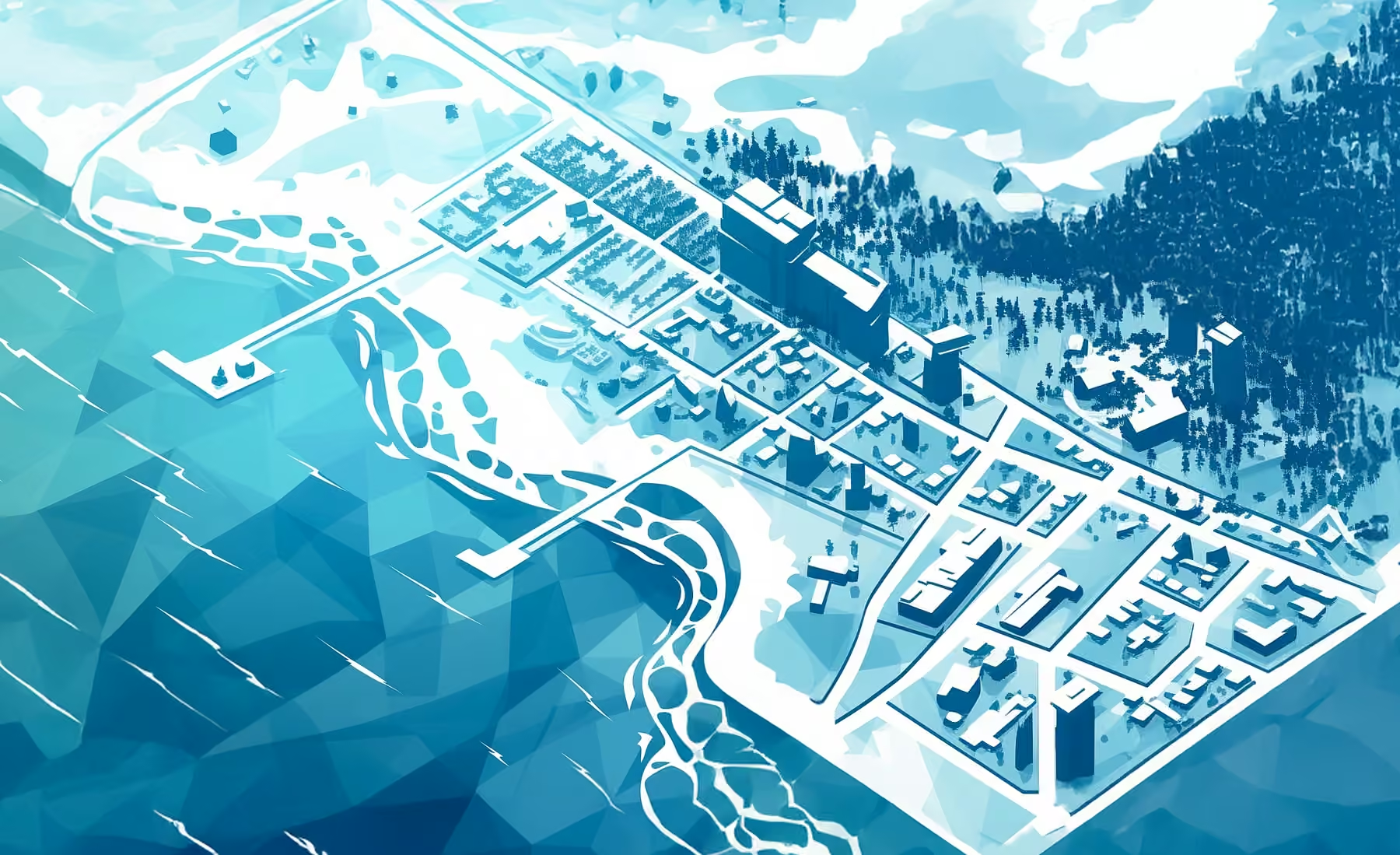
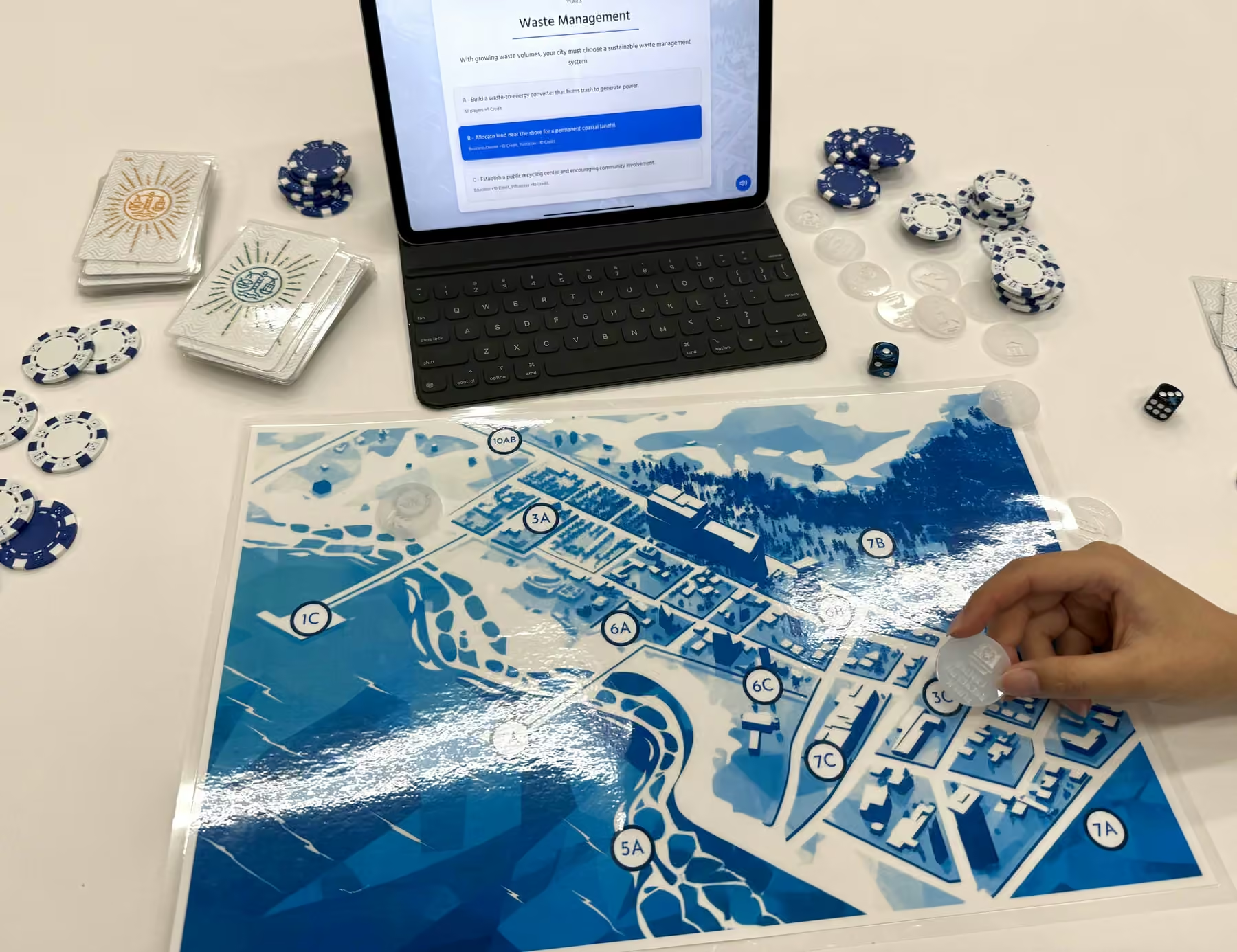
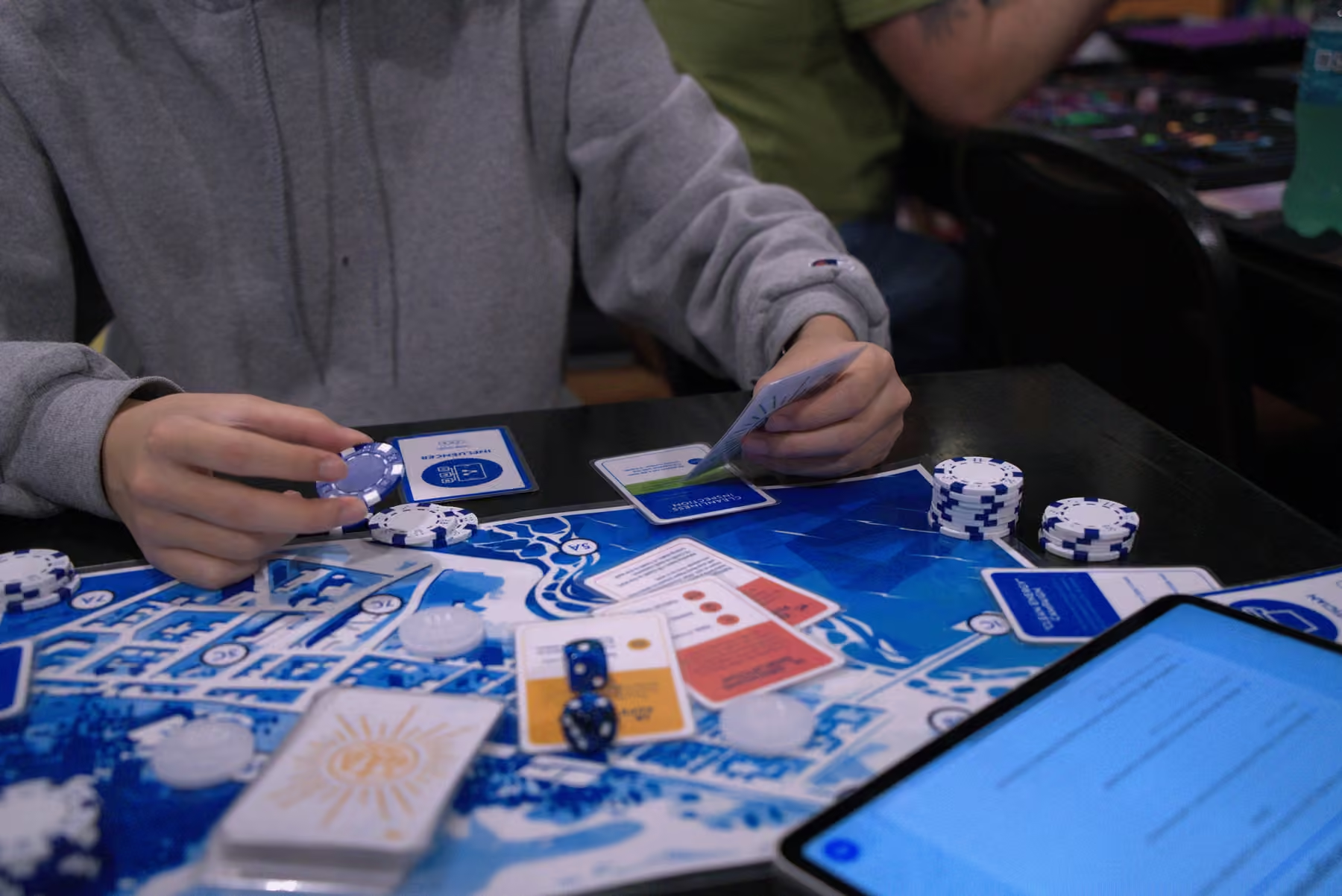
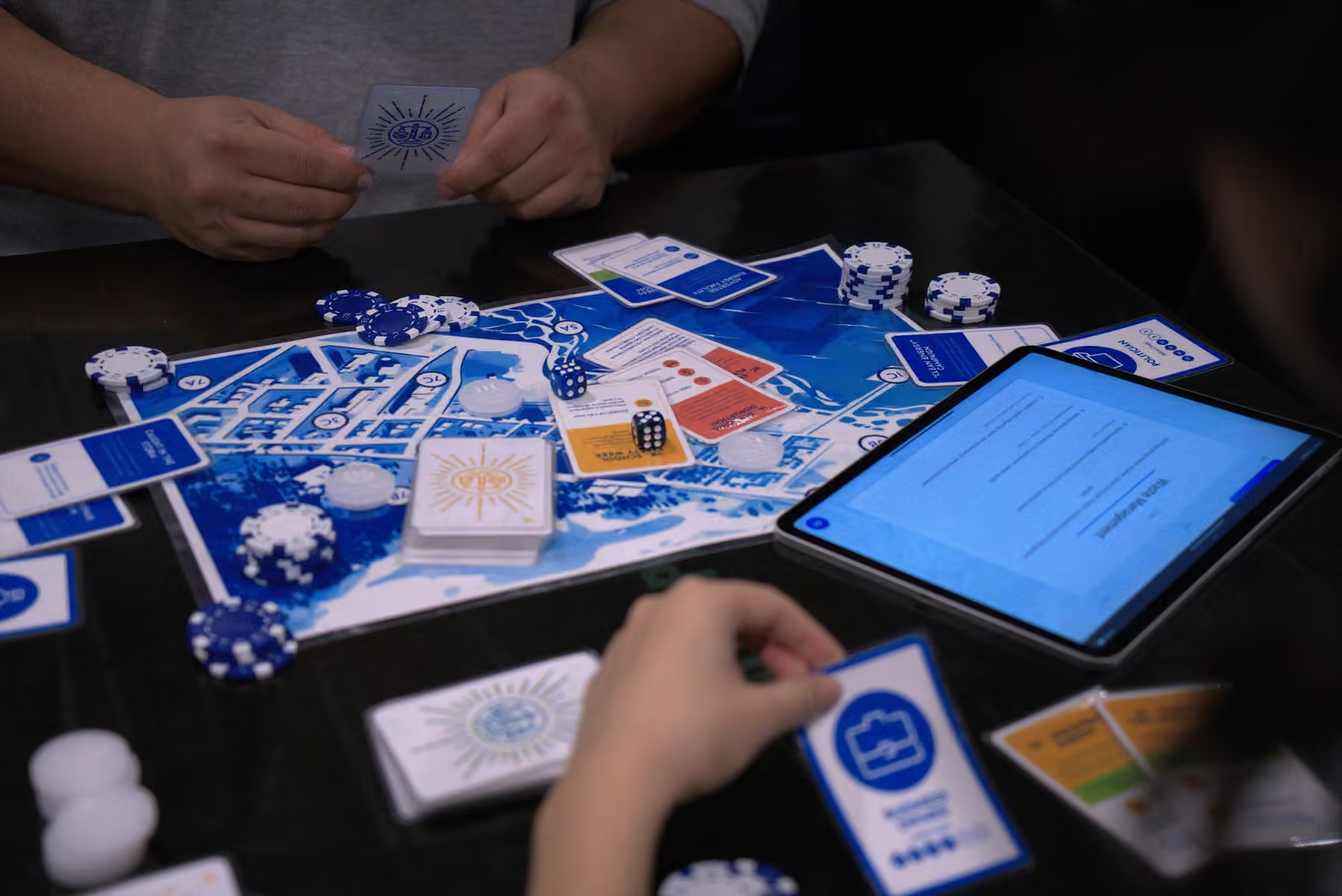
The board shows the shared coastal city, and each Facility Token represents a place players can build there. Some Major Event choices add a facility, such as a Harbor or Science Center. Players match the facility named in the decision to its token, then use the location code printed on both the token and the map to place it. Those additions make the city's choices visible on the table and can matter when later cards are resolved.

Watch the table, then revise
We played the first complete version with multiple groups to observe rule clarity, pacing, and how people negotiated. These sessions exposed both the game's strongest interaction and the friction that needed work.
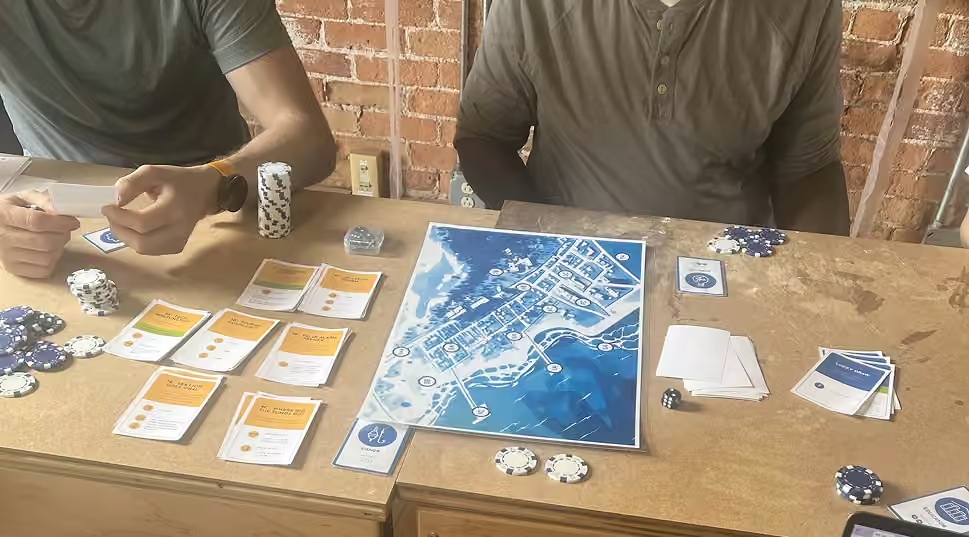
Players began role-playing without being prompted. They debated shared resources and wanted to replay to try different outcomes.
Dense early-round choices felt overwhelming. Some card and website screens needed a clearer hierarchy, and a few event types offered too little agency.
We expanded the event deck, introduced more choices, and rewrote instructions across cards and screens for a more consistent sequence.
Choices with a memory
The physical deck gives players a reason to discuss, take risks, and respond to one another. The digital companion narrates Major Events, tracks the changing city, and guides each handoff between screen and table, so players can focus on the decision itself.
A guide beside the board
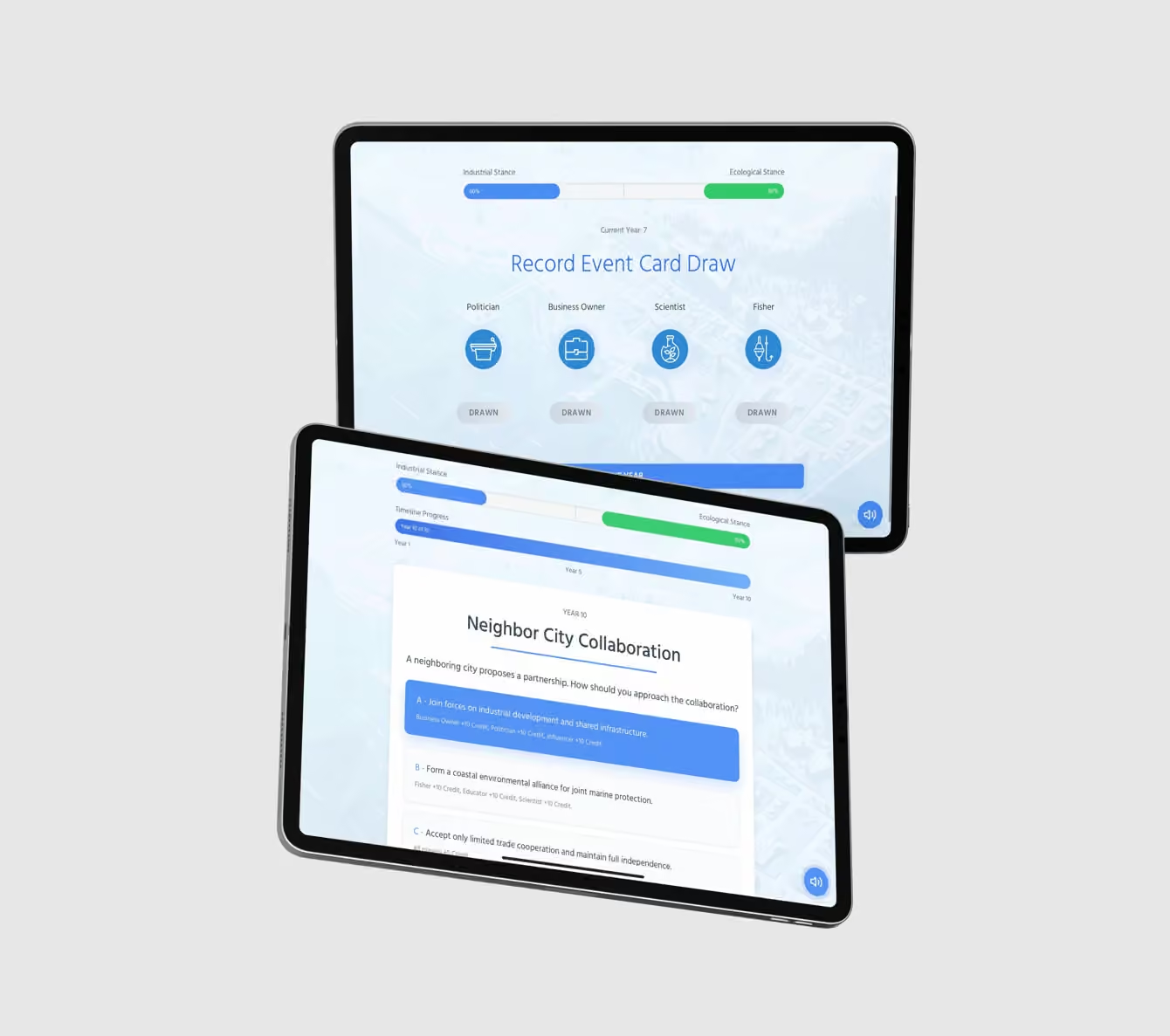
The companion website is a facilitator, not the game itself. It introduces the world, presents each major event, records the city's progress, and tells players when to return to their physical cards. Keeping these instructions short lets the discussion stay at the table.
From structure to guided play
Early wireframes tested the sequence of roles, story, and decisions. Later screens introduced a stronger visual hierarchy and the industrial/ecological progress display. The final companion keeps the current action prominent while letting supporting details wait.
Made to be handled
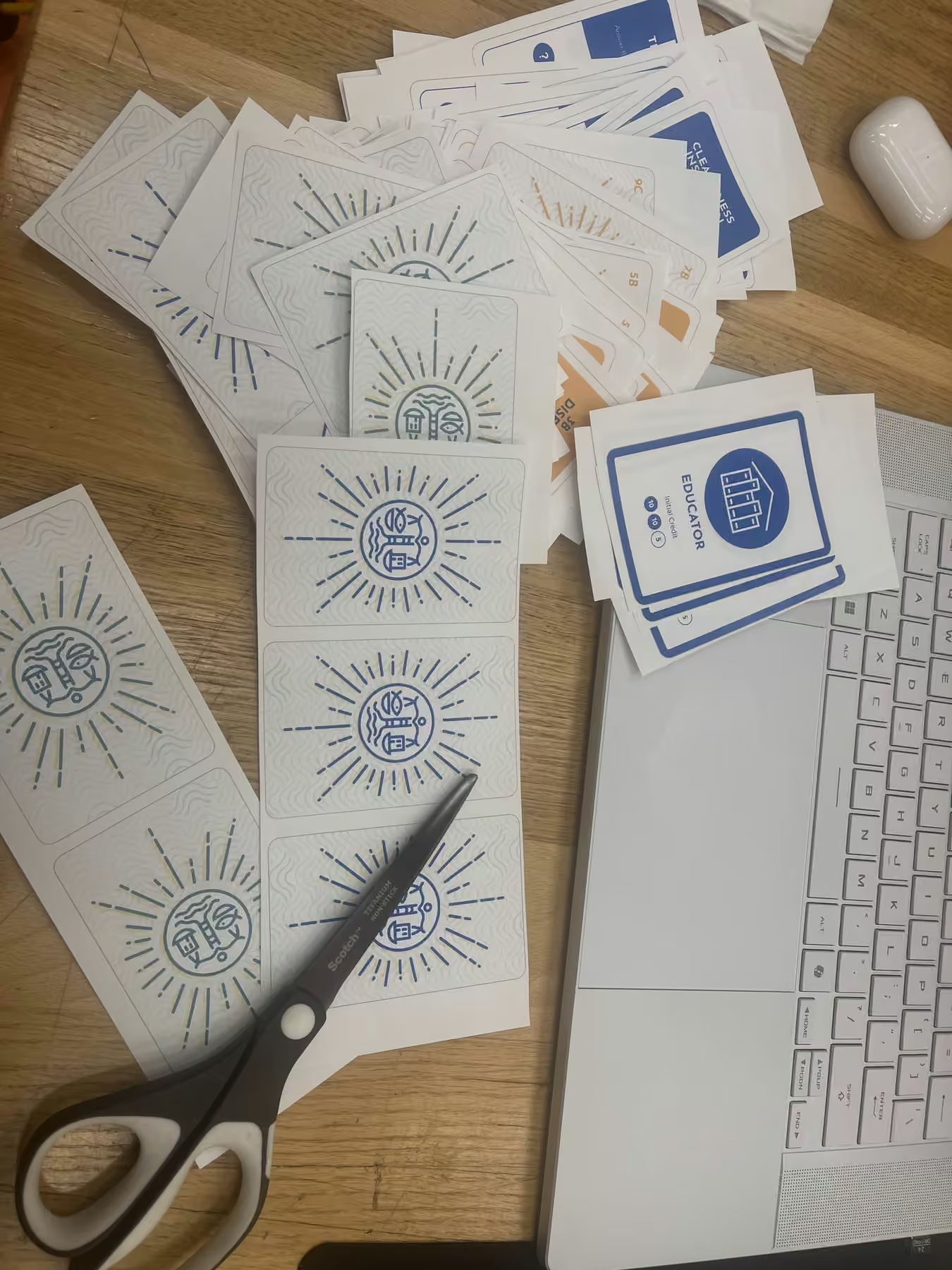
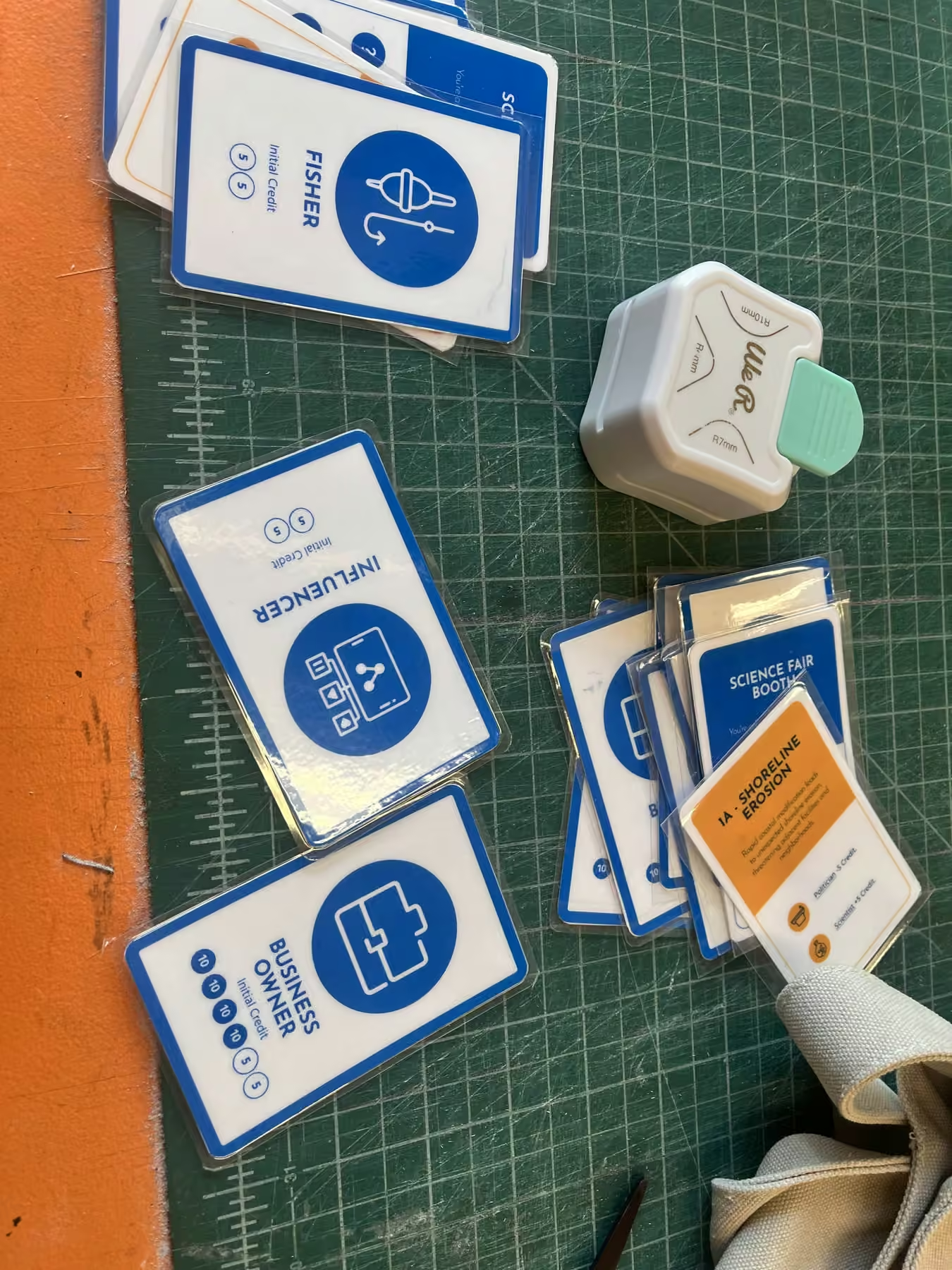
The physical components were produced and revised by hand. Card stock, lamination, the board, and acrylic facility tokens had to survive repeated rounds of passing, stacking, and placing—so production was part of the game design, not simply its finish.
Reflection & Next Steps
TideBound showed me that game systems and interface systems share a basic responsibility: people need to understand what they can do now and why it matters later. The strongest playtest moments came when players negotiated freely; the weakest came when rules or dense screens interrupted that momentum.
With more time, I would test with more varied groups and educators, refine the companion for classroom use, and explore modular content packs. I would keep measuring success by the quality of discussion at the table, not by how much information the interface can show.